Stories & Books · 6 min read
7 Friendship Activities for Preschoolers and Kindergarten
What friendship looks like at 3, 4 and 5, seven activities with a question to talk about for each, and three free pages to color.
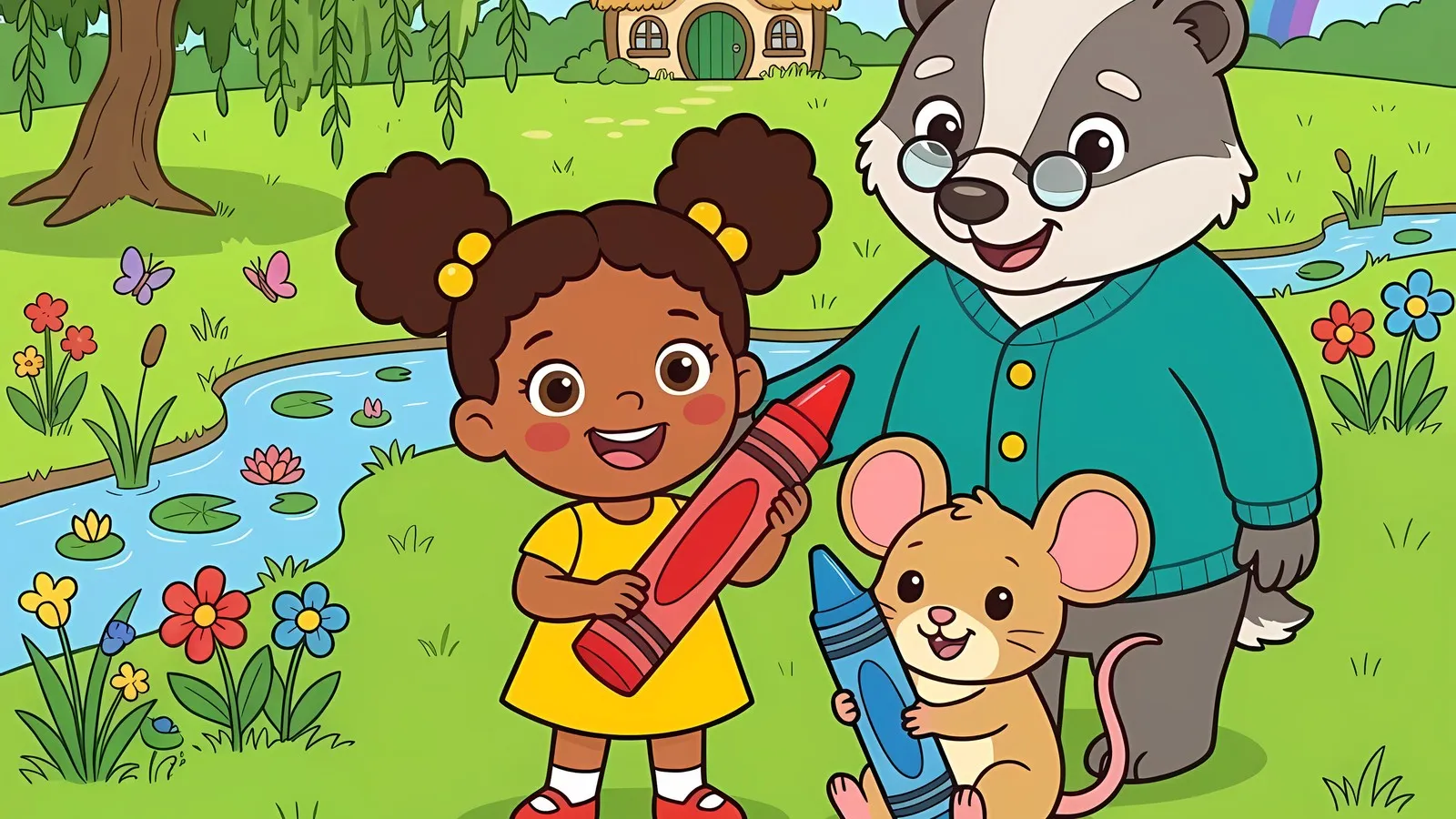
In short: Between 3 and 6, children learn friendship by practicing it. Here are seven friendship skills, from sharing to saying sorry, each with one activity, one question to talk about and a Best Friends story that shows it, plus three free pages to color.
Maybe your child came home from preschool and said nobody plays with them, or the teacher mentioned that your 4-year-old mostly plays alone. Parents ask about this again and again, so you're not the only one wondering what to do.
So where do you start? To me, having a common interest, and a game like coloring and drawing, helps children get along and draws out their imagination to the peak. That's why this guide gives you seven friendship skills for preschool and kindergarten, each with one activity, one question to talk about and one of our Best Friends stories that shows it.
What friendship looks like at 3, 4 and 5
Around 3, many children start to notice other children and join them to play. Some already have friends they can name and look for when they arrive, and others don't have a friend to name yet but are keen to make one.
By 4, most children can tell a friend from the other children they know. Some make friends easily, while others are slow to warm up or happy with one or two friends, and knowing your child's temperament helps you plan play that suits them. This is also when many children comfort a friend who is hurt or sad, like hugging a friend who is crying, as the CDC's milestones for 4-year-olds put it.
And by 5, most children follow rules and take turns when they play games with other children.
The seven skills at a glance
Raising Children Network, an Australian parenting site, lists the friendship skills preschoolers practice: talking and listening, sharing, taking turns, cooperating, seeing other people's points of view and coping with winning and losing. Four of our seven are on that list, and the other three come from the CDC's milestones and from Raising Children Network's advice for when play goes wrong.
| Skill | Often seen around | Best Friends story | Ask while you color | Try this |
|---|---|---|---|---|
| Making a new friend | 3: joining other children to play | Hello, Toffee! | How could you say hello to someone new? | Act out a hello with two toys or puppets before a playdate |
| Sharing | 4: learning to share through play | The Last Red Crayon | What is something you could share with a friend? | One box of crayons and one big picture for two |
| Taking turns | 4: asking "Can I have a turn?"; 5: taking turns in games | My Turn, Your Turn | What is hard for you to wait for? | A folded drawing, where each child adds one part |
| Saying sorry | Any age: a disagreement now and then is normal | The Wobbly Tower | What three things did Sunny say when she said sorry? | After a fall-out, work out together what went wrong and how to fix it |
| Kindness when a friend is sad | 4: comforting a friend who is hurt or sad | The Rainy-Day Frown | What can you do when a friend is sad? | Draw a picture for someone who is sad |
| Liking different things | 3 to 5: seeing another child's point of view | Different and Still Friends | What do you like that your friend doesn't? | A mirroring game, then a favorite thing each on one page |
| Working together | 3 to 5: cooperating | Gran's Birthday Surprise | Which jobs did Sunny and Toffee share? | A little story book made together, one page each |
Seven friendship activities, one per skill
Each one needs things you probably have at home, like paper, crayons, a coloring book and a couple of toys. And since role-modeling is one of the most powerful ways to help a child learn any skill, play along when you can.
1. Making a new friend
Before a playdate or a first day somewhere new, act out a hello with two toys or puppets, where one says hello and the other asks to play. The CDC suggests stories and pretend play to get a child ready for new places and new people, and at the park you can help your child watch what the others are playing and think of a way to join in. Then ask the question from Hello, Toffee!: how could you say hello to someone new?
2. Sharing
Put one box of crayons between two children and give them one big sheet to color together, because sharing the crayons is the practice. Raising Children Network suggests the same thing with paints and playdough, and the CDC notes that playing with others helps children learn the value of sharing. Then ask: what is something you could share with a friend?
3. Taking turns
Try a folded drawing, where one child draws a part of a funny picture, folds it over and passes it on, so everyone has to wait for their turn. If someone grabs, help them ask "Can I have a turn?" instead, which is the CDC's own example, and by 5 most children take turns in games. Ask: what is hard for you to wait for?
4. Saying sorry
Fall-outs happen, and an occasional disagreement with a friend is natural. When one happens, ask questions so your child understands what went wrong, then think of a way to fix it together and try it, which is how the CDC suggests helping a child solve problems. You can ask, as The Wobbly Tower does: what three things did Sunny say when she said sorry?
5. Kindness when a friend is sad
When your child sees a child who is sad, name it gently and offer a kind thing to do, like the CDC's example: "He looks sad. Let's bring him a teddy." Drawing a picture for someone who is sad is another kind thing to offer, and many 4-year-olds already comfort a friend who is hurt or sad. Ask: what can you do when a friend is sad?
6. Liking different things
Start with a mirroring game, where one child copies the other's moves, because it gets children watching each other closely. Then each draws a favorite thing on the same sheet, and together they look for what's the same, since, to me, a common interest is where getting along starts. Different and Still Friends asks: what do you like that your friend doesn't?
7. Working together
Make a little story book together, one page each, or one big drawing where everyone adds something. Raising Children Network suggests both, a collaborative drawing and a family story book, for learning to cooperate. Gran's Birthday Surprise asks: which jobs did Sunny and Toffee share?
Free pages to color
Here are three pages from Best Friends that you can print for free, one each for sharing, taking turns and kindness. Color them together and ask the page's question as you go.
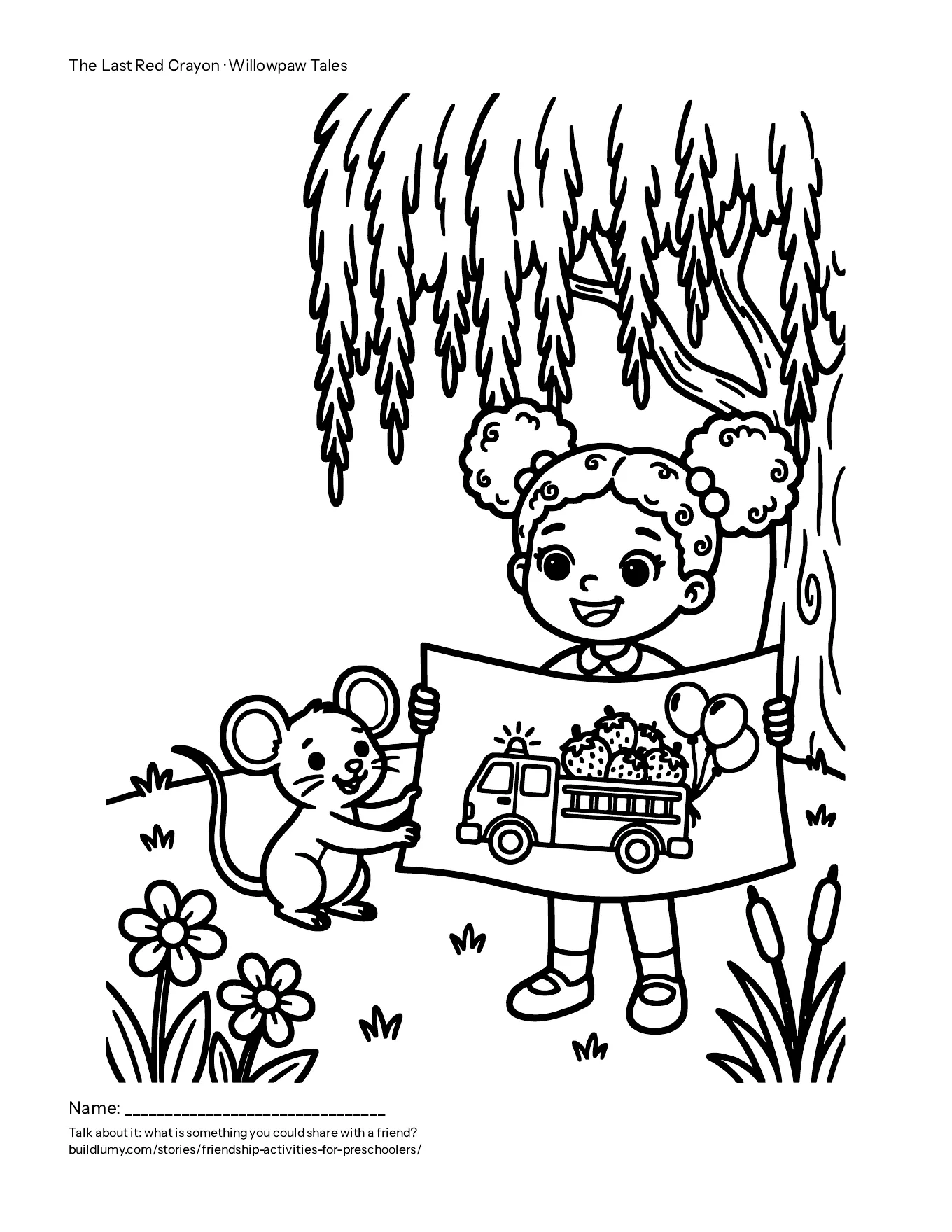
Download: the page as a PDF (US Letter).
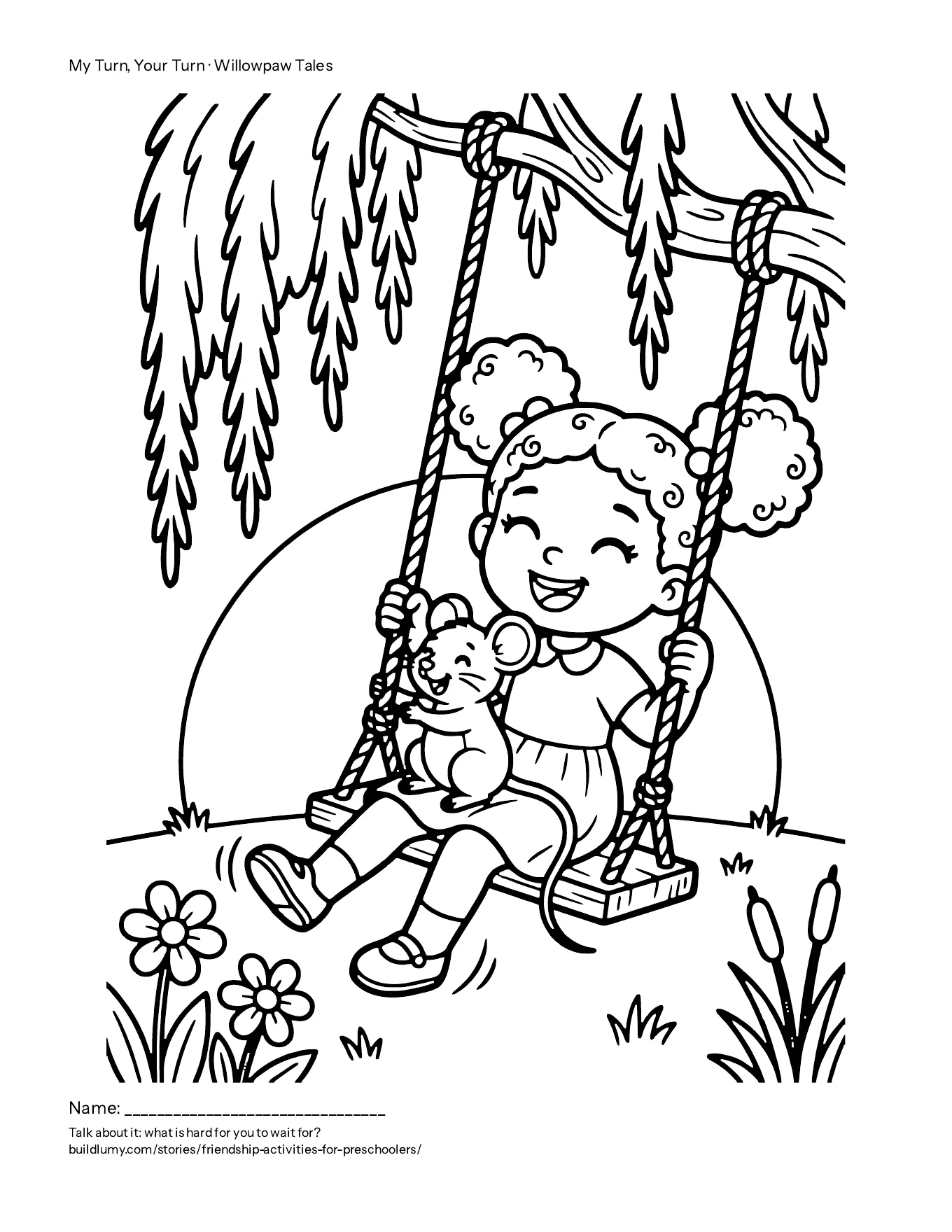
Download: the page as a PDF (US Letter).
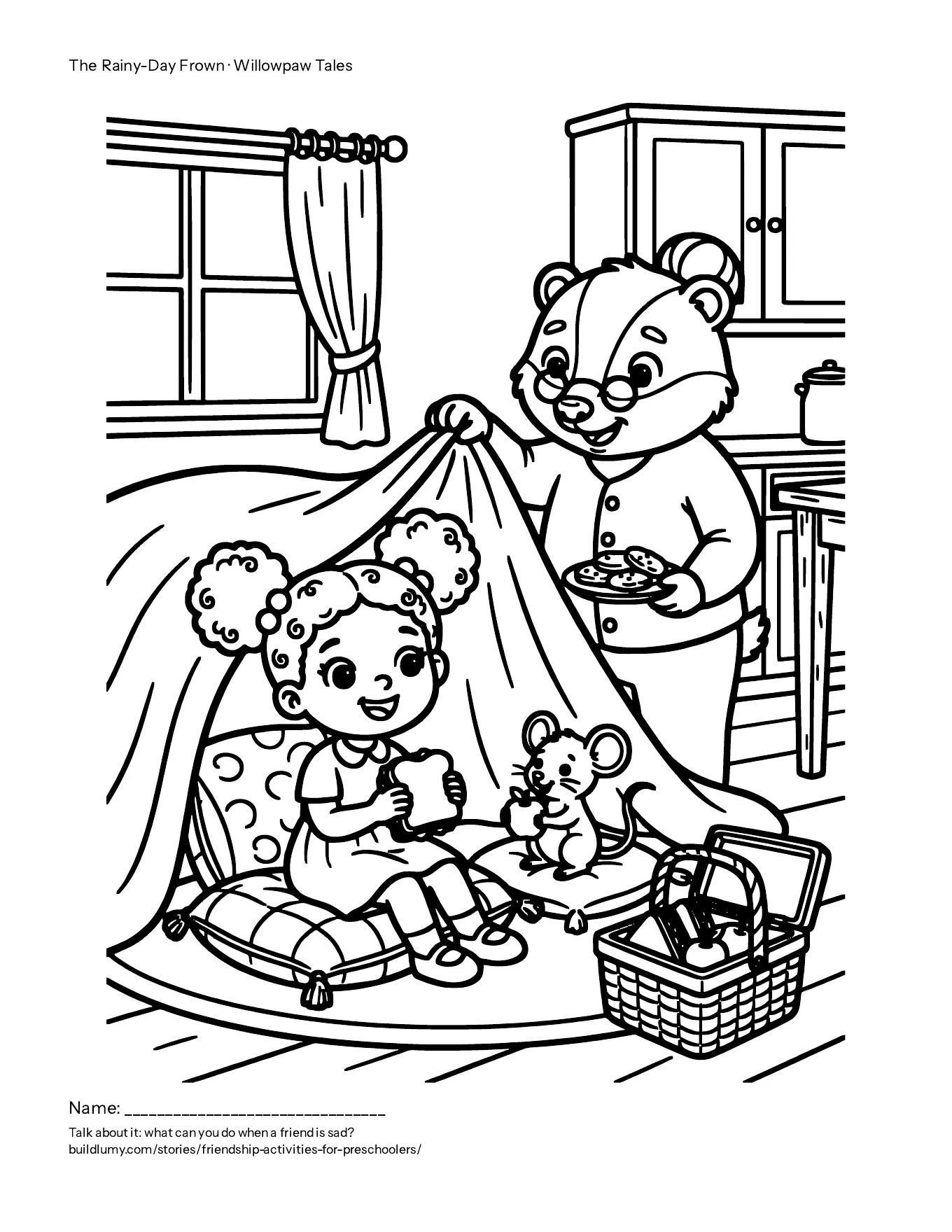
Download: the page as a PDF (US Letter).
A playdate that goes well
Playdates are where these skills get used, so a little setup before friends arrive helps.
Checklist: a playdate that goes well
6 steps
When it goes wrong
Some days it won't go to plan, and that's fine. Playing alone now and then is usually nothing to worry about, and when one child says "You're not my friend!", they're often friends again a few minutes later.
But if your child keeps telling you about problems with friends at preschool, or with one child in particular, talk to the teacher. And if your child says nobody plays with them, start with the joining-in ideas in activity 1, because some children are keen to make friends before they have one they can name.
Why drawing and stories help
That's my view on coloring and drawing, and the research points the same way: Raising Children Network's ideas for sharing, taking turns and working together include drawing and painting, and it calls reading one of the best ways to learn about other people's thoughts and feelings. Stories help at home too, since in Scholastic's Kids & Family Reading Report, 59% of parents said they had used a children's book to help their child with a specific feeling.
The advice in this guide comes from the CDC's milestones and Raising Children Network, together with my view on coloring and drawing, so you can check it at the source.
For preschool and kindergarten teachers
Teachers ask for friendship-theme ideas too, from sensory play to favorite books. The table works as a week's theme, with one skill a day, the activity in the morning and the story's question at circle time.
The book
If you'd like the stories themselves, they're in Best Friends, our story and coloring book, with seven friendship stories, three talk questions after each and four pictures to color in every story.
The book in this guide
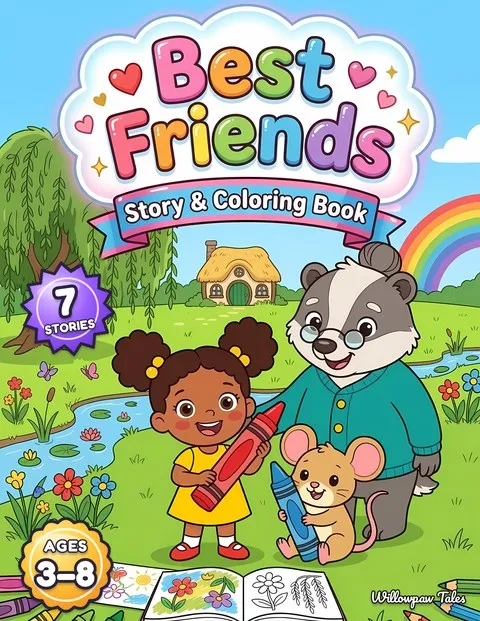
Best Friends
A Story & Coloring Book with 7 Stories for Ages 3–8
What's inside
- 7 friendship stories to read aloud, one skill each
- 28 pictures to color, each with a blank back
- 3 talk questions after every story
- 84 pages, 8.5 × 11 in paperback
$9.99 paperback on Amazon.com
See it on AmazonTags: friendship · preschool · kindergarten · coloring