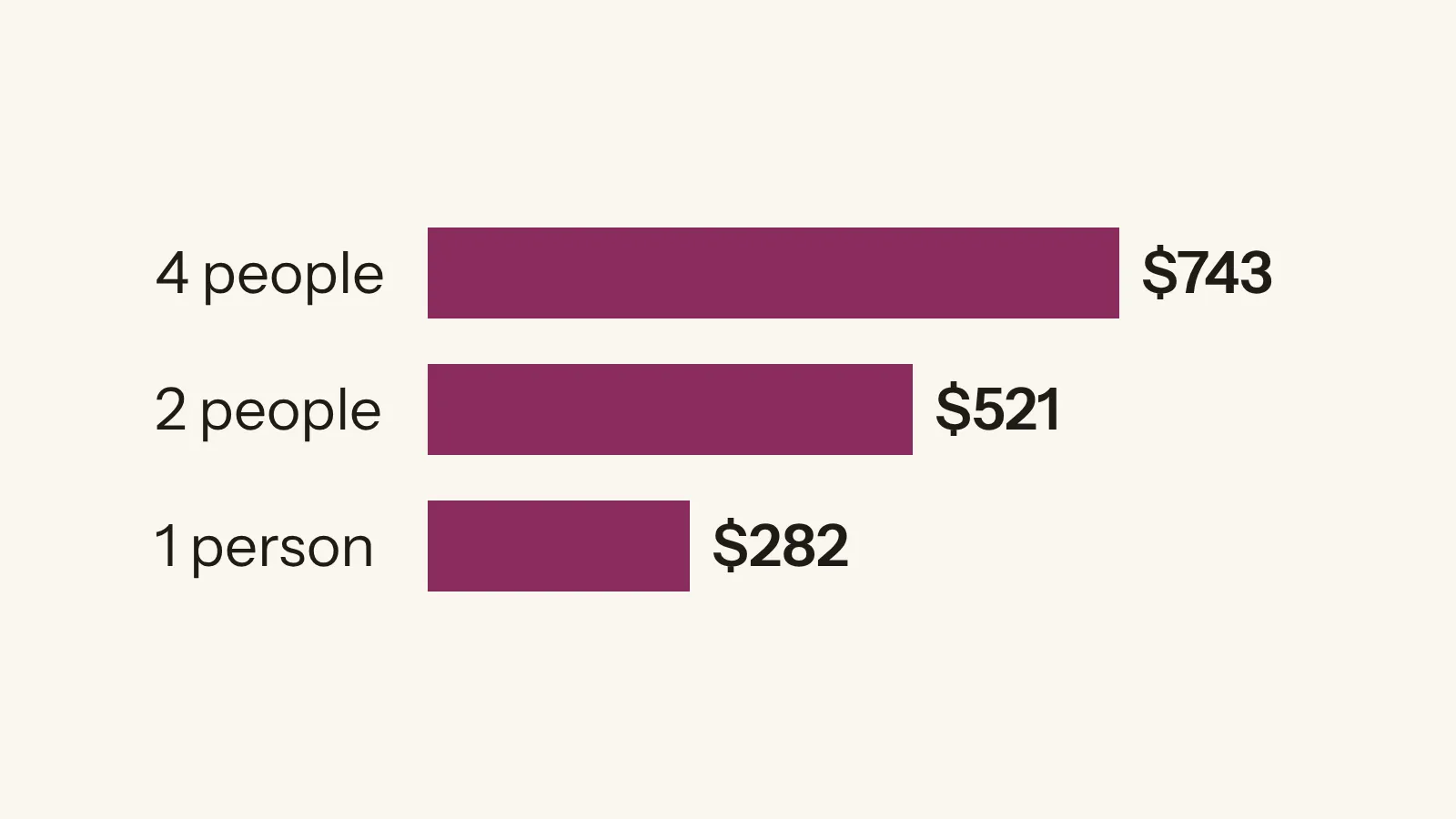
Finance · 9 min read
FD Credit Card: 5 Cards Compared on One Real ₹8,000 Month
I got my first card against an FD before my first job. Here's what each card gives back, and what paying only part of the bill costs.
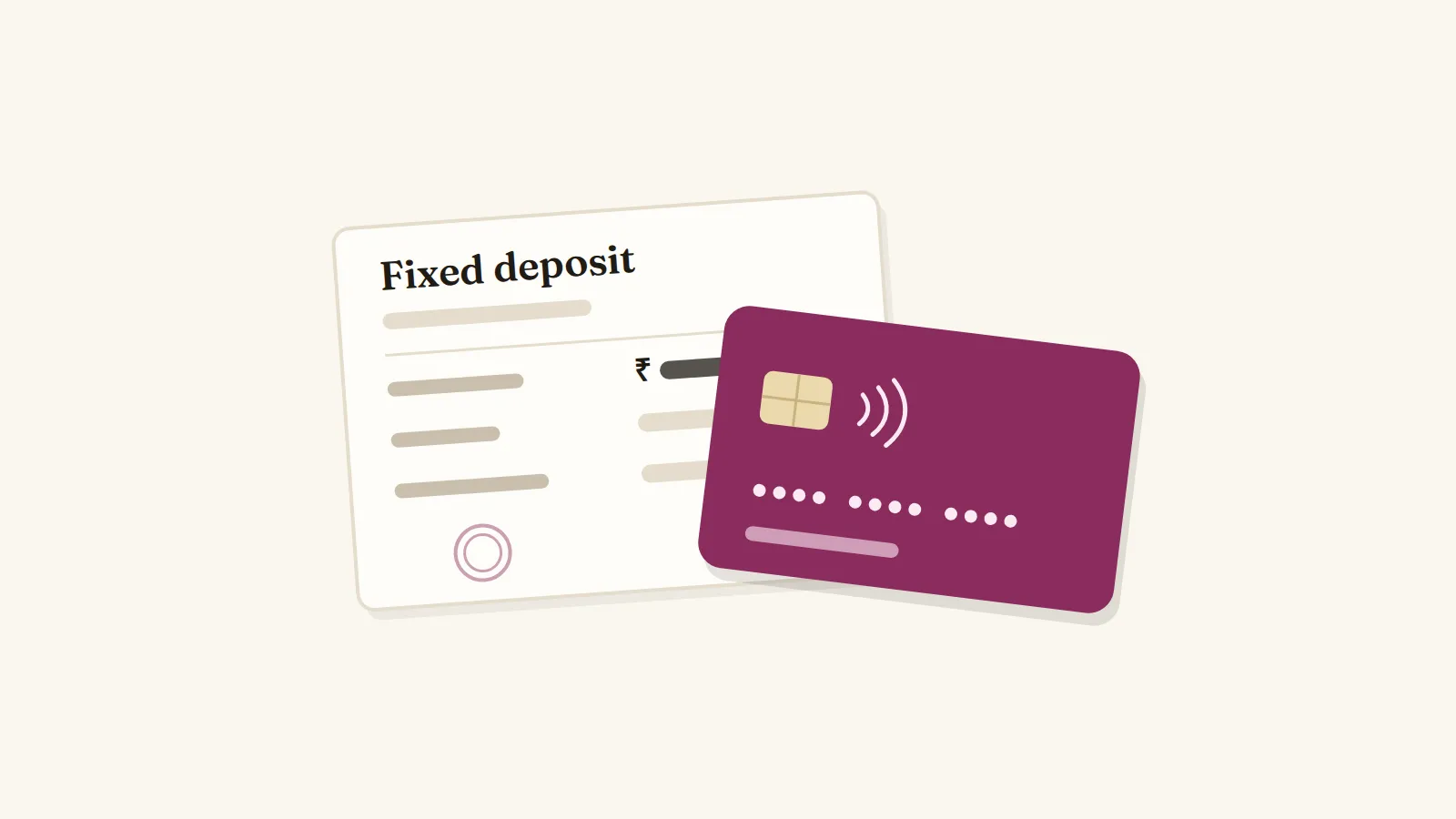
In short: You can get a credit card without income proof: put ₹5,000–₹20,000 in an FD and the bank gives you a limit of 80–100% of it. On the same ₹8,000 month, the 5 cards here gave back ₹11 to ₹74, but paying only part of one bill cost up to ₹363. So pay in full, every month.
So many people search for the right credit card and even after searching they don't get the right one. And there are many who take a loan for a month because they don't know about credit cards, and they fear a card will put them in bigger debt than the loan they took at more than 2% a month.
So here's the answer first. If you don't have a salary slip or a credit history yet, an FD credit card is the way in that doesn't ask for income proof: you put ₹5,000 to ₹20,000 in a fixed deposit, and the bank gives you a card with a limit of 80 to 100% of it.
I put the 5 cards in this article through the same ₹8,000 month, and they gave back between ₹11 and ₹74. But paying only part of that one bill would cost up to ₹363 in interest, which is more than double what a 2%-a-month loan costs. So a card costs you nothing extra only when you pay the whole bill by the due date, and that's what I do every month.
My own first card was an FD card too, and I got it before I had a job.
How an FD credit card works, and why approval isn't automatic
An FD credit card is a normal credit card with one difference: your fixed deposit stands behind it. That's why the bank can give you a card without income proof or a credit history, and your limit is a share of the FD, 100% at IDFC FIRST, 90% at HDFC and ICICI, and 80 to 90% at Axis.
The smallest FD changes from bank to bank. For the cards in this article it starts at ₹5,000 for IDFC FIRST Quantum+, ₹15,000 at Axis and HDFC, and ₹20,000 for IDFC FIRST WOW!, while ICICI asks for ₹50,000.
And your FD doesn't stop earning while it backs the card, because the interest keeps coming like on any other FD.
But don't read "no income proof" as "sure approval". The bank still has the final say, and IDFC FIRST writes on its own page that it issues the card "based on an assessment of his/her credentials". People do get rejected for FD cards, so keep a plan B.
My first card: an FD card, before my first job
When I chose my first card I didn't have a job, so it was an FD-based credit card, OneCard. I got it in 2025 with an FD of under ₹10,000, and my limit was the same as the FD.
And it was pretty good, because it gave me so many coins that turned into repayment of that card. Over time they paid off somewhere between ₹500 and ₹2,000 of my bills, and I still have the card, still on the FD.
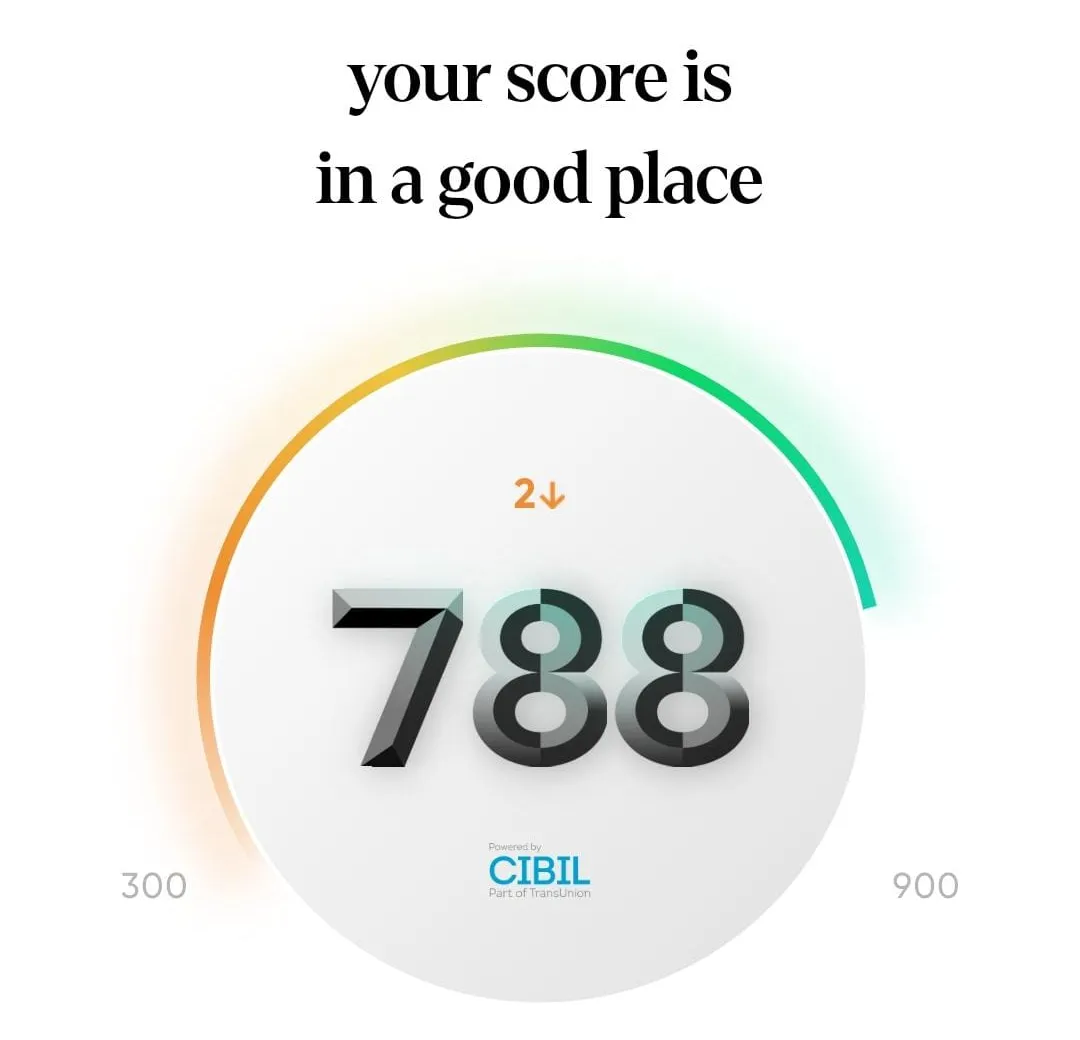
The bigger thing it gave me was a credit record. I pay back at the end of the month every time, and this keeps my CIBIL score around 800, which is way better and makes banks trust you. This is my score as I write this, with my name and photo hidden.
How I picked the 5 cards
You can find long lists of FD cards on big sites, but they don't tell you the full reality, like the conditions behind an "up to 3%". So I didn't copy anyone's list. I made my own rules first, for someone with a small FD who wants a free card that pays something back on everyday spends.
My rules were simple: the smallest FD is ₹20,000 or less, there's no fee or the bank shows a waiver on its own page, the card pays back on everyday spends, it needs no income proof, and I could check every number on the bank's own page.
That left out two big names. ICICI's FD card needs a ₹50,000 FD and charges ₹500 + GST a year, which is a lot for a first card. HDFC also gives a card against an FD of ₹15,000, at 90% of it, but I could only check its limit, not what it pays back. And I left out cards whose terms I couldn't check on the issuer's own page.
OneCard is in the table because it's my own card. Its numbers come from OneCard's own card terms, and the value of a point from my OneCard app.
5 FD credit cards compared
Here's the quick view first, so you can see which cards your FD can get you.
| Card | Smallest FD | Limit | Fee | UPI | Good for |
|---|---|---|---|---|---|
| IDFC FIRST Quantum+ | ₹5,000 | 100% of the FD | Lifetime free | Yes | UPI and everyday spends |
| Axis IndianOil Easy | ₹15,000 | 80–90% of the FD | Free on Axis's FD-card page, ₹500 on the card's own page | Axis doesn't say | Fuel at IndianOil |
| Axis MY Zone Easy | ₹15,000 | 80–90% of the FD | Free on Axis's FD-card page, ₹500 on the card's own page | Axis doesn't say | Movies |
| IDFC FIRST WOW! | ₹20,000 | 100% of the FD | No joining or annual fee | No, it's a Visa card | Card and online spends |
| OneCard (my card) | ₹2,000 or ₹5,000 (OneCard's 2022 blog) | 100% of the FD | None (OneCard's 2022 blog) | No, mine is a Visa card | My first card |
I took every number from the banks' own pages on 7 October 2026, like Quantum+'s cashback rules, and here is what each card gives back, with the conditions that sit behind every "up to".
| Card | What it gives back | The conditions |
|---|---|---|
| IDFC FIRST Quantum+ | 1% on UPI and in shops (fuel too), 1% online, 2% online above ₹10,000, 0.5% on bills | UPI cashback only through IDFC FIRST's own app; nothing on ATM cash or EMIs; the 2% only on the online part above ₹10,000 in a cycle; at most ₹500 back per cycle |
| Axis IndianOil Easy | 4% on fuel at IndianOil, 1% online, about 0.2% on other spends | Fuel bills of ₹400 to ₹4,000; at most ₹5,000 of fuel and ₹5,000 online count each month |
| Axis MY Zone Easy | 4 points per ₹200, about 0.4%; 25% back on movie tickets | Movie cashback at most ₹1,000 a year; a point is worth about ₹0.20 (Axis's IndianOil page: 20 points per ₹100 = 4%) |
| IDFC FIRST WOW! | 4 points per ₹200 online and in shops (0.5%), 1 point per ₹200 on bills | 1 point = ₹0.25; no points on fuel; ₹99 + GST each time you redeem |
| OneCard (my card) | 1 point per ₹50, so 0.2% at ₹0.10 a point | 5X on your top 2 categories only if you spend ₹750 or more in each of 3 categories; nothing on fuel, rent, wallets, cash and, since 15 July 2026, bills |
And while the FD backs your card it keeps earning: IDFC FIRST says up to 6.5% a year on the FD behind Quantum+, and Axis pays 6.25% on a 1-year FD today.
One real month on each card
Numbers like "up to 2%" don't tell you much on their own, so I put all 5 cards through the same month. It's a normal month on a ₹20,000–₹35,000 salary: ₹3,000 at shops, ₹2,500 online, ₹1,500 for phone and electricity bills, and ₹1,000 of fuel at IndianOil, so ₹8,000 in all.
| Card | How I counted it | Back this month |
|---|---|---|
| Axis IndianOil Easy | 4% of ₹1,000 fuel + 1% of ₹2,500 online + 0.2% of ₹4,500 other spends = ₹40 + ₹25 + ₹9 | about ₹74 |
| IDFC FIRST Quantum+ | 1% of ₹3,000 at shops by UPI in IDFC FIRST's app + 1% of ₹2,500 online + 0.5% of ₹1,500 bills + 1% of ₹1,000 fuel = ₹30 + ₹25 + ₹7.50 + ₹10 | about ₹72.50 |
| Axis MY Zone Easy | 4 points per ₹200 at ₹0.20 a point: 108 points on shops and online make ₹21.60; Axis doesn't say if bills and fuel earn points, and if they do it's 160 points, ₹32 | ₹21.60 to ₹32 |
| IDFC FIRST WOW! | 60 points on shops + 48 online + 7 on bills = 115 points at ₹0.25; no points on fuel | about ₹28.75 |
| OneCard (my card) | ₹5,500 of shops and online ÷ 50 = 110 points at ₹0.10; bills and fuel earn nothing, and this month misses the 5X bonus, which needs ₹750 in each of 3 categories | about ₹11 |
So which card wins? With fuel in your month, the IndianOil card and Quantum+ are almost level, ₹74 against ₹72.50. Without fuel, Quantum+ is far ahead, as long as you pay at shops through IDFC FIRST's own app. Pay through another UPI app and Quantum+ drops to ₹42.50, because its UPI cashback only comes through its own app.
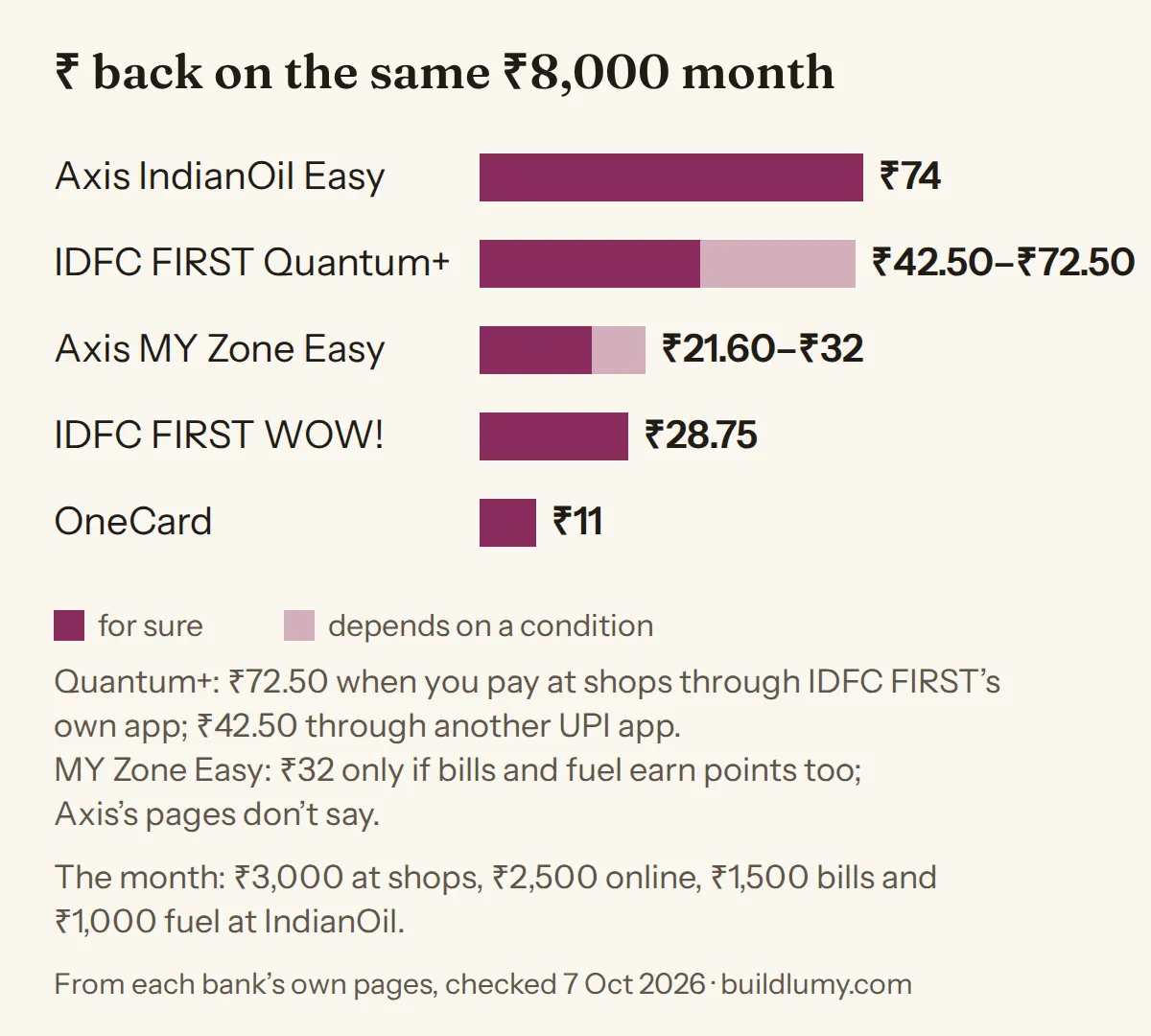
And my OneCard comes last here, even with all the coins it gave me. That's partly because of its rules: since 15 July 2026 it gives nothing on bills and utilities, and the 5X needs ₹750 in each of 3 categories. So the best card really depends on how you spend, and that's why it's very important to choose the right card for yourself.
What paying only part of the bill costs
Now the part I said I'd say plainly. A credit card costs you nothing extra only when you pay the whole bill by the due date. If you pay only part of it, the interest starts from the date of each purchase, not from the due date.
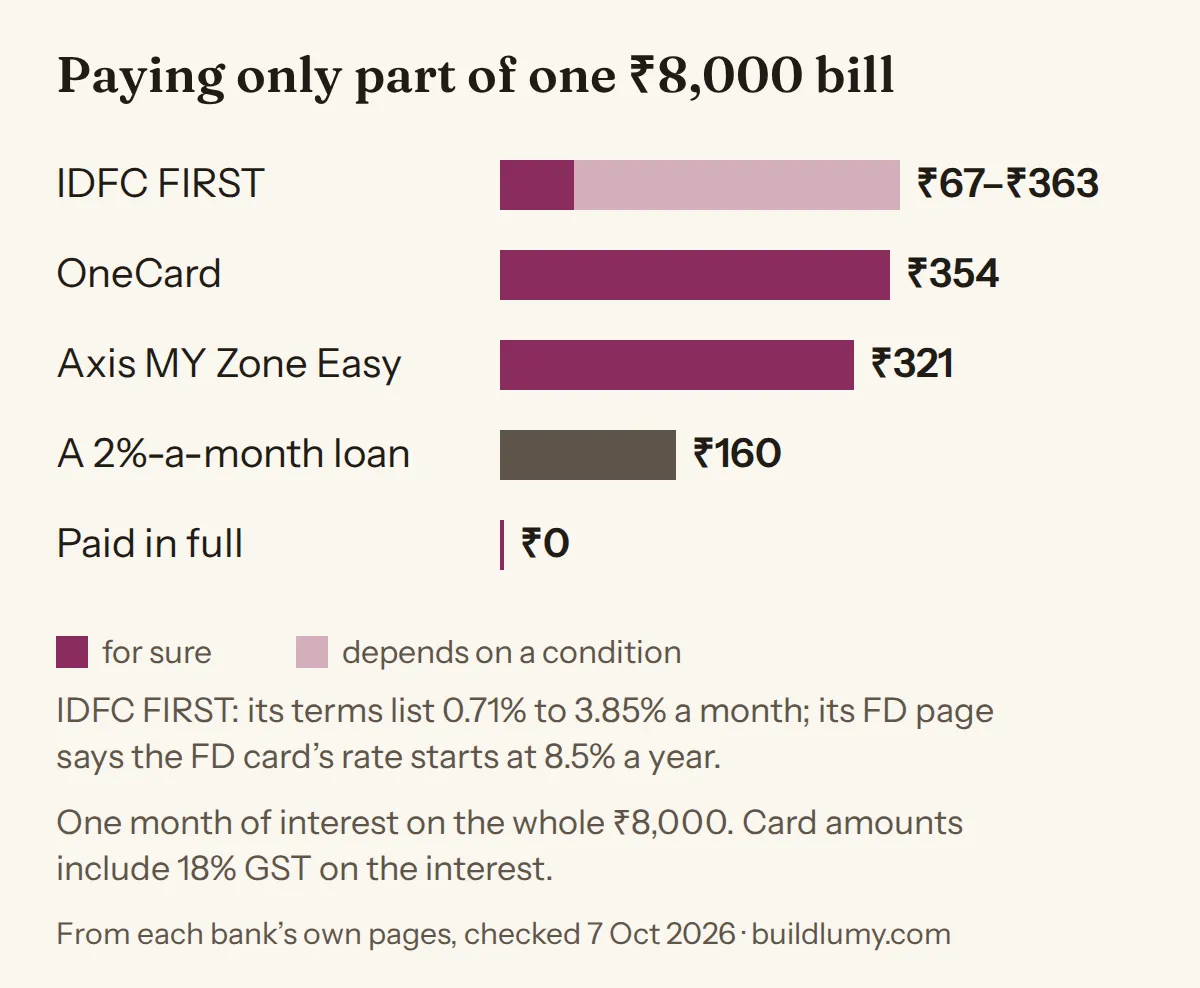
So take the same ₹8,000 month and say you pay only part of the bill. IDFC FIRST's own terms list 0.71% to 3.85% a month, and its FD page says the FD card's rate starts at 8.5% a year. At the top rate that's ₹308, and 18% GST goes on top of interest, so it becomes about ₹363; at the lowest it's about ₹67. OneCard charges 3.75% a month, about ₹354 with GST, and Axis MY Zone Easy 3.40%, about ₹321. A loan at 2% a month on the same ₹8,000 would cost ₹160.
So the fear about cards is right in one way: at the top rates here, a card bill you don't pay in full costs about twice as much as that 2% loan. But pay it in full and it costs ₹0, and you even get something back.
And before you say "I'll pay only the minimum, just this once": that one month can already cost ₹321 to ₹363 here.
And if you don't pay even the minimum, it gets worse. It counts as a default, the bank reports it to the credit bureaus, and because your FD is the security for the card, the bank can take what you owe from it, as IDFC FIRST's terms say.
What I added next: slice and Axis Neo
After more than a year with the FD card I applied for two more cards, slice and then the Axis Neo card, and now each one has its own use for me.
slice gives me a flat 1% cashback that turns into direct money, and it also has a game that I like to play once in a while, which gets me 200 to 500 coins, so ₹2 to ₹5 extra. It's a RuPay card, so it works everywhere, and that's why I use it for retail shopping.
But slice's own page says "up to 3%" today, and that's exactly the kind of "up to" you have to read twice. The 3% needs a ₹5 lakh average balance with slice over the last 90 days, and fuel, rent, wallet loads, insurance, EMIs, education, gaming and tax earn nothing at all. slice also says its cashback is a promotional offer that it can change.
An extra benefit of slice is its savings account, which gives more interest than other normal banks, 5.50% a year on its page today. But a slice bill you don't pay in full costs 42% a year, so the same rule applies.
The Axis Neo card gave me ₹300 cashback on my first transaction in 2026, and I use it for bill payments like phone and electricity bills. The 5% off I got on my electricity bill was an offer on Paytm, so treat it as an offer, not a fixed feature of the card.
So now OneCard is for Visa payments, slice for retail shopping and Neo for bills, and I pay back at the end of the month every time.
Before you apply for an FD card
So if you're about to get your first card against an FD, this is what I'd check.
Before you apply for an FD card
7 checks
And check every number again on the bank's own page on the day you apply, because offers change and I checked these on 7 October 2026. After all this, the card only works for you if you pay it in full, and that part is up to you.
Tags: fd credit card · credit card · cibil · money